Randall Model 14 Attack
The Randall Model 14 “Attack” is one of the most recognizable combat knives ever produced.
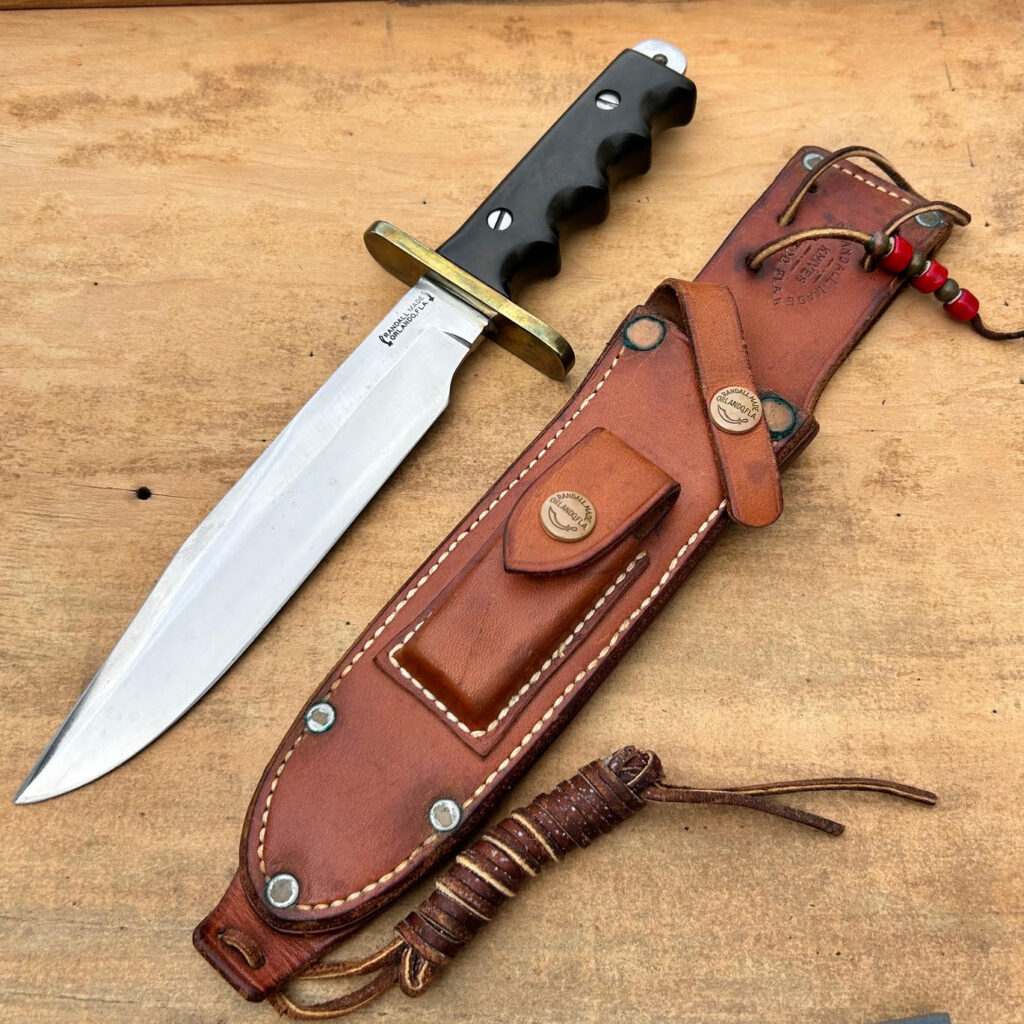
Introduced in the 1950s, it was designed specifically for military and survival use at a time when Randall knives were already well respected by servicemen. The Model 14 features a thick, durable 7 1/2″ blade made of 1/4″ stock and a strong double hilt to protect the user’s hand. Some knives feature a saw back option.
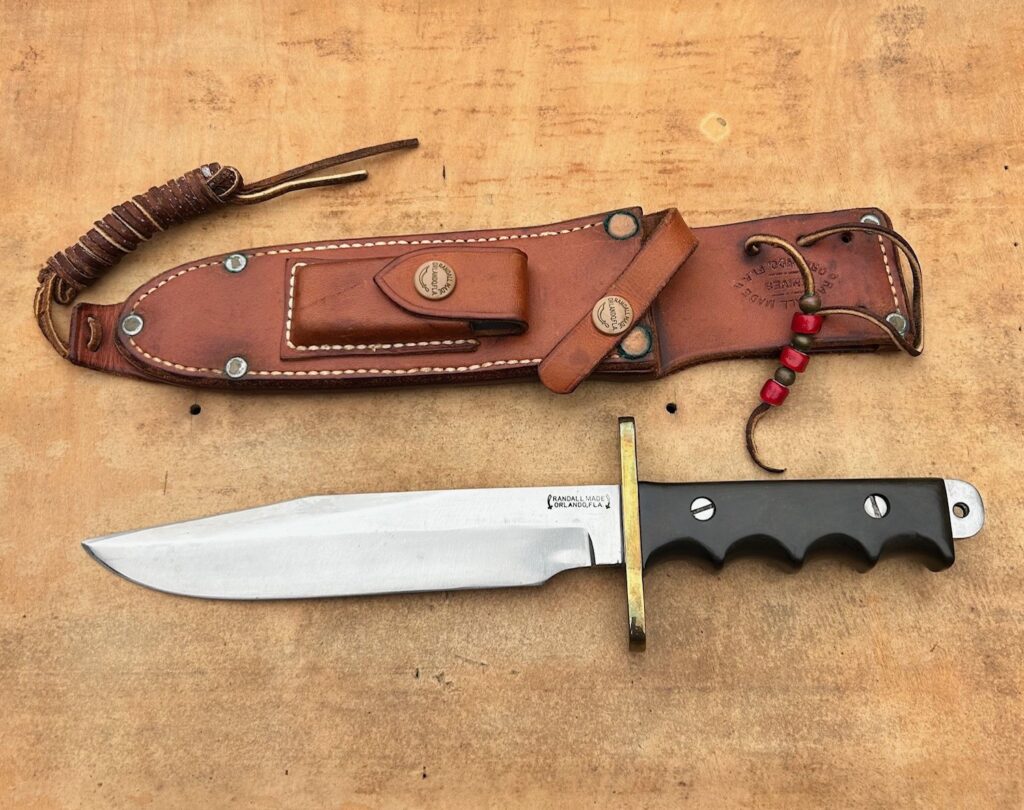
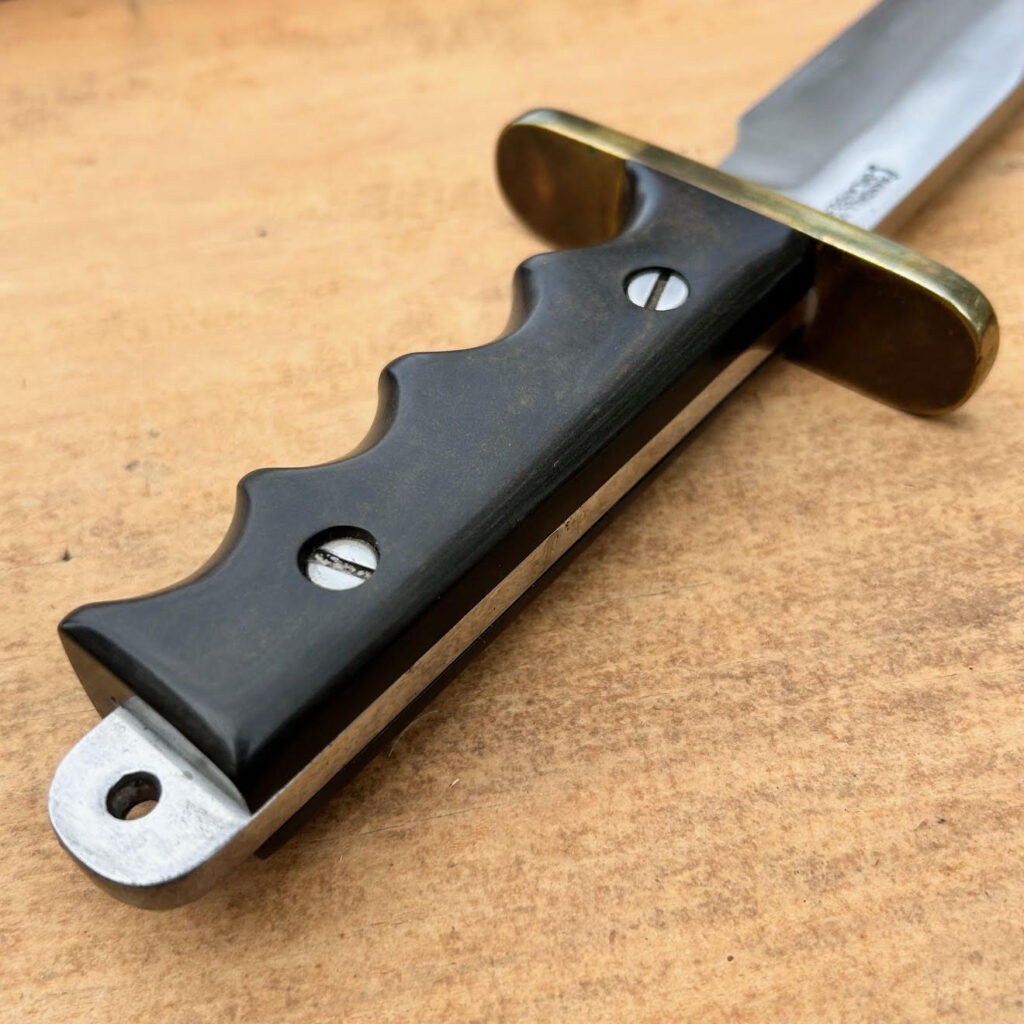
Early knives featured green Tenite handles, two exposed screws and an extended tang (see above) with a thong hole. By the mid 1960s, the transition to Micarta handles had occurred and the tang was made flush with the handle.
The Model 14 Attack features rugged construction and a practical design, making it particularly well suited to the demanding conditions faced by soldiers in Vietnam. Today, these knives are highly sought after; especially early production examples and those that can be directly linked to wartime use
Randall Model 14 Attack for sale on eBay
Check out these Randall Model 14 Attack knives that are currently for sale on eBay. I earn a small commission when you make a purchase at no extra cost to you.


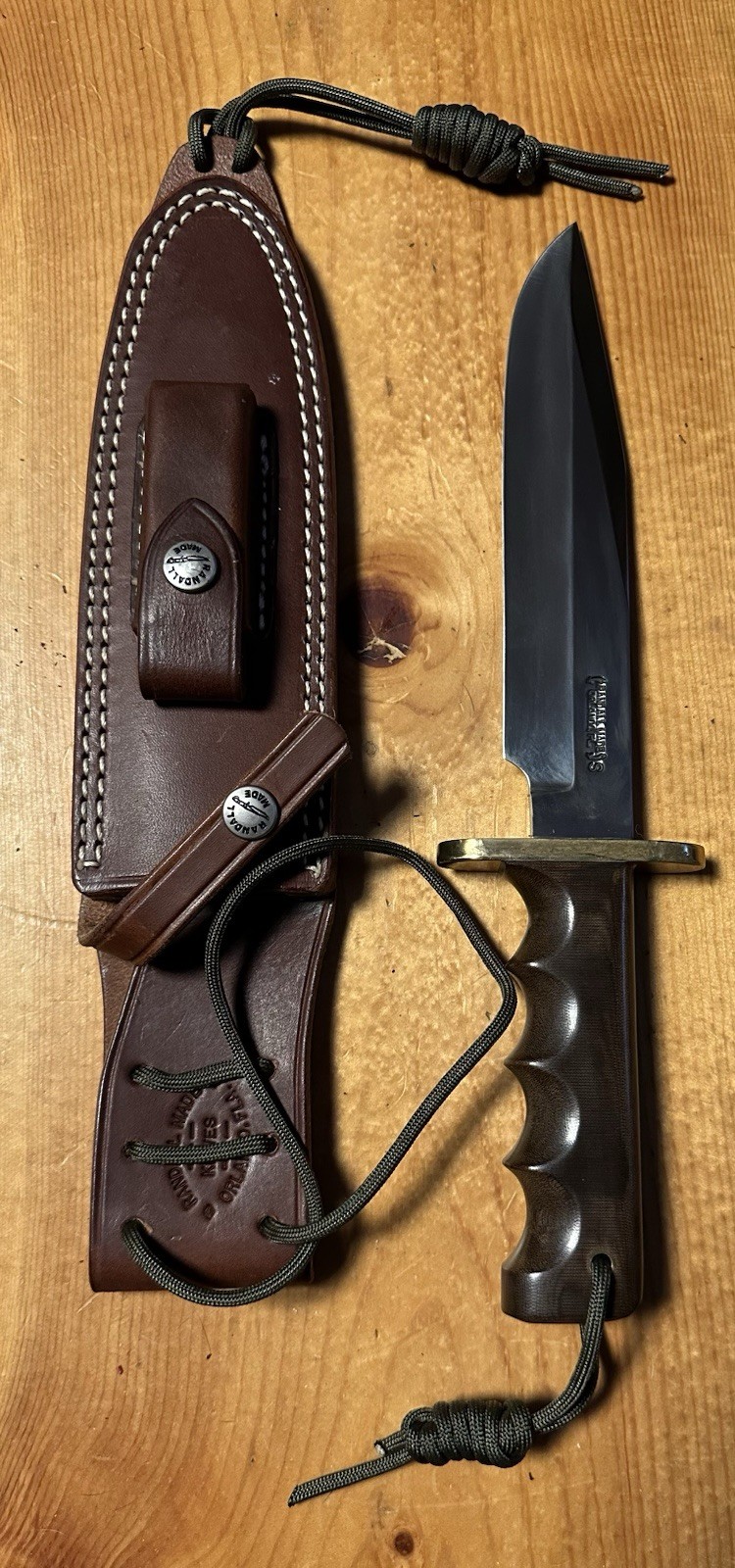


Randall 14 Attack – Early Vietnam Era
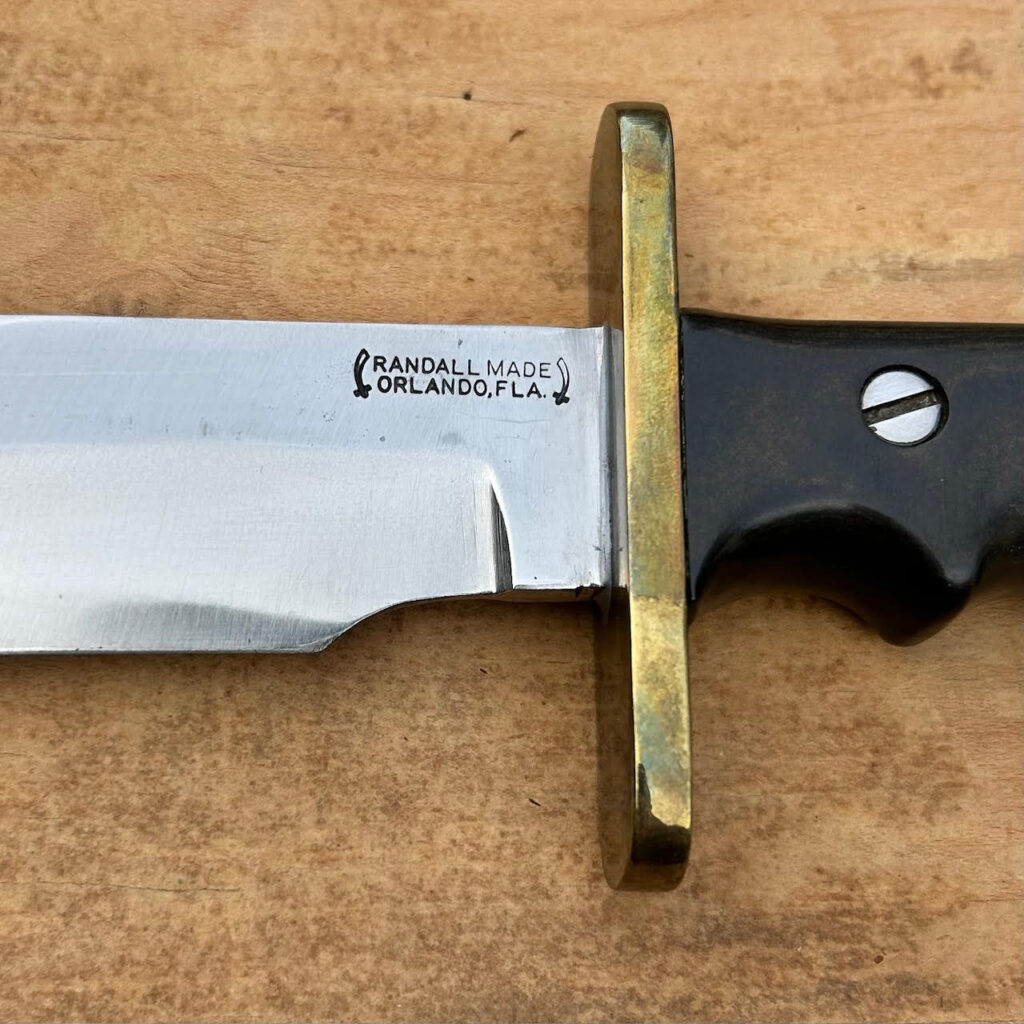
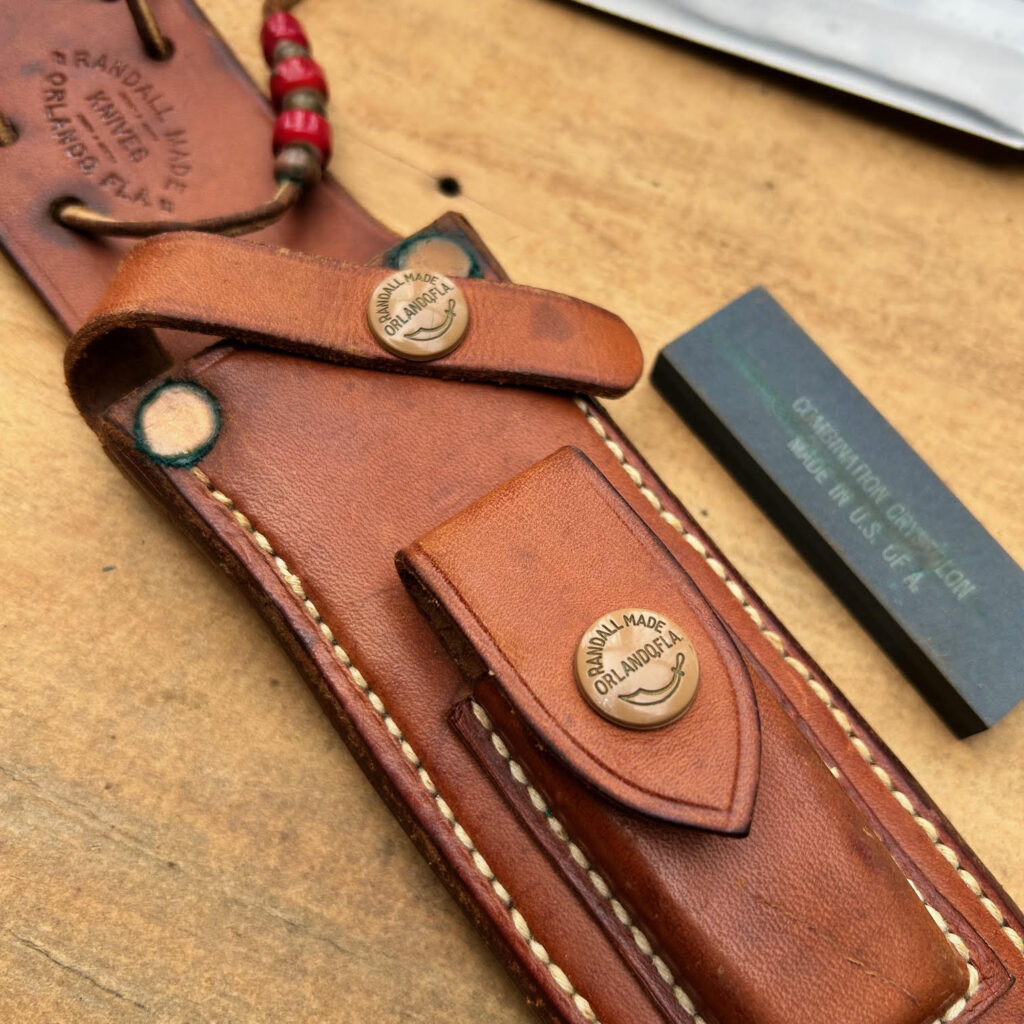
Here is a more detailed look at a c. 1963 era Randall Attack 14. The sheath features brown buttons as opposed to the earlier Canteen snap which phased out in 1963 or 1964.
What makes this knives unique is that it features Micarta handles, not the characteristic green Tenite handles. This knife could have been a transition piece as Tenite handles were phased out. In the 1963 Randall Catalog, the model 14 is listed with the extended, exposed tang and green Tenite handles but the 1965 catalog shows the model 14 with Micarta handles and the extended tang has been removed.
Opinions from other collectors suggest that this knife may have been returned to Randall at some point to be rehandled. Since Tenite was no longer being used, it may have been replaced with a Micarta handle.
In addition, this could explain why some of the original early features remain on the knife. Knives sent back to Randall in the 1970s were often updated to the then-current factory standards, which typically included removing earlier features such as the extended tang.